

The Four Dimensions of Person-centered Arts Practices With Communities
By Dr. Felicia Low
Director, Community Cultural Dimensions (Singapore)
A framework for arts practitioners
Interested in working with communities, or the social issues and needs of people in society?
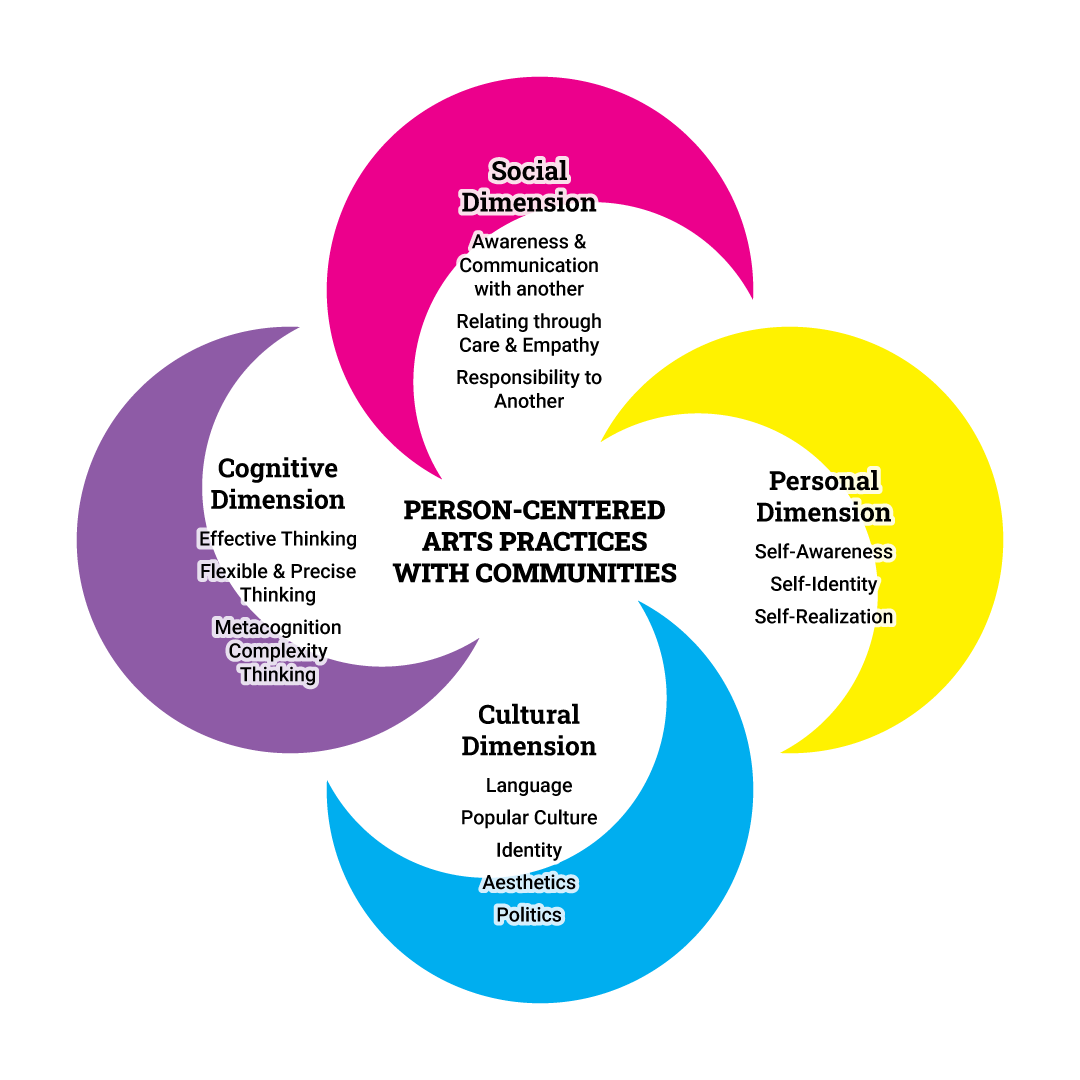
This is a framework for analyzing your facilitation approach, to understand the possible effects of your approach on your participants. It encourages you to deepen your practice by engaging with the growth and development of your participants across the social, personal, cognitive and cultural dimensions.
Person-centered Arts Practices with Communities as a pedagogical approach was developed by Dr. Felicia Low after 15 years of practice, and 3 years of research. It was supported by the National Arts Council, Singapore.
This pedagogical approach encourages artist-facilitators and organisations to develop objectives and evaluation methods which map out how participants can be supported across their personal, social and cognitive dimensions. It also demands an aspect of recognition of the community’s cultural traits, in programme development and evaluation. In this way, arts programmes with communities will be planned and evaluated based on the unique qualities of each community group. The 4 dimensions can be used to better understand the strengths and needs of individuals within each group.
Tutorials
Introduction To the Person-centered Framework: Why? For What?
Introduction to Person-centered Arts with Communities Read more
#1 The Personal Dimension
An Introduction to key concepts and practice of the Personal Dimension. Read more
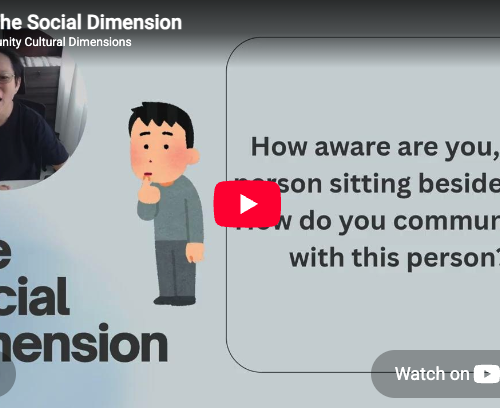
#2 The Social Dimension
An Introduction to key concepts and practice of the Social Dimension. Read more
From theory to practice
In my journey as a dance therapist, I have pondered the issue of professional boundaries – where does the dance artist end and the dance therapist begin? My inclination in more recent years has veered towards a democratic perspective, recognising the great work community artists – “non-therapists” – can achieve. At the same time, I have been aware that artists working with groups such as I worked with (people with dementia) required something beyond arts skills in order to facilitate inclusive, participatory and life-enhancing activities.
Dr. Heather Hill
Dr. Low addresses this issue exactly. She provides a coherent and impressive theoretical framework to underpin the work of the person-centred arts facilitator and offers practical guidelines for setting up and running arts programs which are sensitive to context (hence “person-centred”). The aim of this book is a thoroughly worthy one in its encouragement to develop arts activities which become, in Dr. Low’s words, “an active means of growth” for the participants. From my personal experience, I also know just how enriching a person-centred approach is for the arts facilitator, which is why the following remark by Dr. Low on the value of working in a person-centred way so resonates with me, for this is “a practice that will never stagnate, never come to a closed conclusion, because communities too never stagnate and come to closed conclusions”.
Dance movement therapist for over 30 years, now consultant in dance and person-centered practice in dementia
The Author
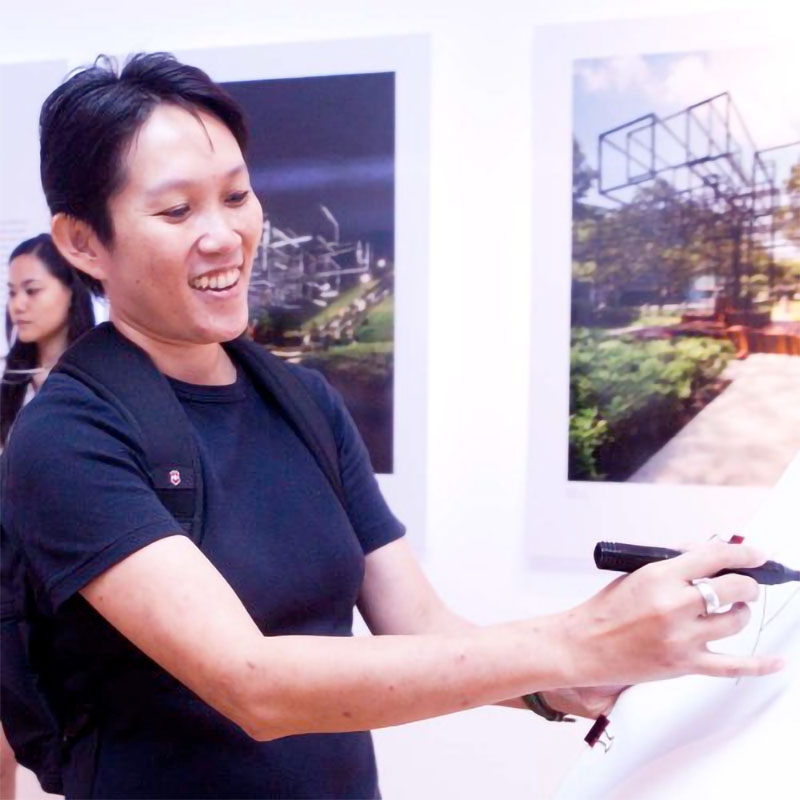
Dr. Felicia Low, a graduate of Goldsmith’s College has been a practicing visual artist and art educator since 1999.
A Lee Kong Chian scholar of the National University of Singapore, Felicia obtained a PhD in Cultural Studies in Asia in 2015. She has also developed research and written a pedagogical guide on Person-centred Arts Practices with Communities, with support from the National Arts Council. She continues to work with various social institutions and organisations to conceptualise and coordinate arts programmes and research.
Felicia was the recipient of the Outstanding Youth In Education Award 2005 and was selected for the President’s Young Talent Show 2009 organized by the Singapore Art Museum. She received the Teaching Merit Award from the Singapore University of Social Sciences in 2019. Felicia is the founding director of Community Cultural Dimensions, which aims to provide a critical discursive platform for artistic practices that engage with communities in the region. She is also a part-time lecturer at Lasalle College of the Arts (MA Arts Pedagogies and Practices) and at NTU (BA Public Policy & Global Affairs).